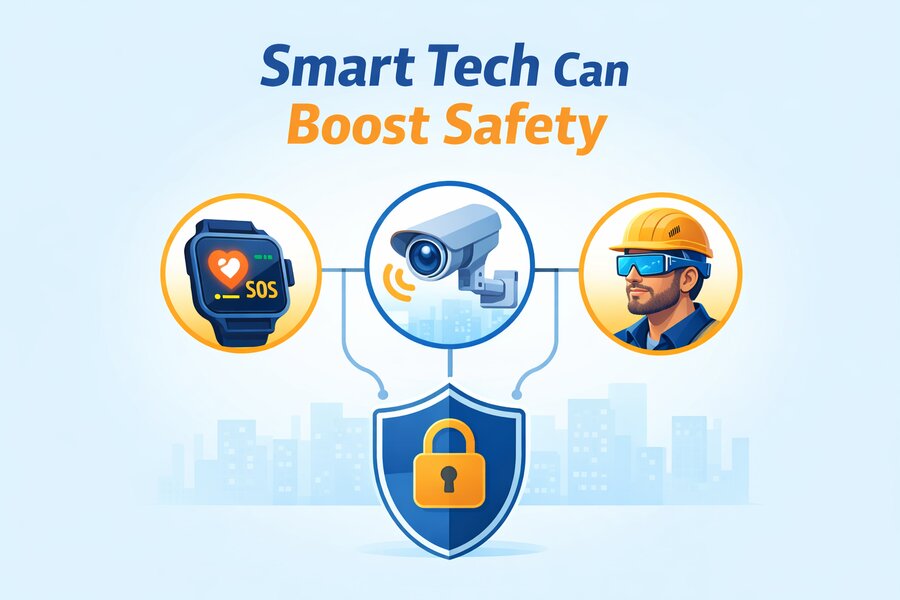

For local manufacturers, job shops, and small warehouse operators, the hardest part of growth is that everyday industrial workspace challenges stay invisible until they bite. Inefficient manufacturing processes quietly drain margin through delays, rework, and missed deadlines, while workplace hazard risks raise the stakes with injuries, downtime, and tense conversations about accountability. Even teams committed to small business industrial safety can feel stretched by inspections, documentation, and shifting requirements.
Seeing these pressures clearly turns modernizing industrial environments into a practical step toward steadier operations.
Quick Summary: Smart Tech Wins for Safety and Output
- Use industrial IoT sensors to monitor conditions and spot issues early.
- Use wearable safety devices to protect workers and reduce incident risk.
- Use automation systems to streamline workflows and improve consistency.
- Use modern workplace safety technologies to strengthen compliance and day to day readiness.
- Use connected tools to drive measurable operational efficiency improvements across the workspace.
Understanding Smart Factory Building Blocks
To make smart tech work on the shop floor, start with the basics. Edge computing means processing data close to the machines, so alerts and decisions happen fast. Add wearables and safety sensors to spot fatigue, risky zones, or abnormal conditions, then connect them to automation systems that can respond consistently.
This matters because “safer and faster” only pays off when uptime targets are clear. When you map what must stay running and what can pause, you can choose scalable, configurable control hardware that improves visibility and cuts unplanned stoppages, including options for industrial automation control. Growing demand for tools like the industrial wearables market signals this is becoming a practical investment, not a niche.
Think of it like running a retail operation with live inventory. Safety sensors market size tools are your stock counts, wearables are staff check-ins, and the control system is your reorder rules.
Align → Pilot → Train → Scale → Review
Smart tech pays off when you run it like a business system, not a one-time install. This rhythm helps small business owners protect cash flow, reduce costly downtime, and build a story you can use in operations marketing: “we run a safer, more reliable floor.” It also turns adoption into manageable sprints, so your team stays confident while your metrics stay honest.
| Stage | Action | Goal |
| Align priorities | Define the vision, constraints, and uptime targets | One-page plan tied to business outcomes |
| Map risk and waste | Walk the floor; list top hazards and delays | Clear list of problems worth instrumenting |
| Pilot one line | Instrument one area; set alert thresholds | Fast learning with low disruption |
| Train and standardize | Train users; update SOPs and escalation paths | Consistent responses across shifts |
| Scale and tune | Expand sensors; refine rules; track ROI weekly | Higher throughput with fewer incidents |
When you align first, pilots stay focused and budgets stay controlled. Training locks in behaviors so scaling does not multiply confusion, and ongoing tuning keeps the system aligned with changing demand. Deloitte reports smart manufacturing investment can drive improvement in production output, which is why measuring before and after matters.
Start with one pilot you can defend on a spreadsheet.
Industrial Smart-Tech Quick-Start Checklist
Keep this moving forward:
This checklist turns your pilot into repeatable execution, so you protect cash, avoid preventable incidents, and capture proof you can use in growth planning and marketing. Small wins compound, and true technology grows fast when adoption is focused and measured.
- Confirm top three hazards and delays worth monitoring
- Set baseline metrics for incidents, downtime, scrap, and cycle time
- Choose one workflow to instrument with sensors and clear thresholds
- Define alert owners, response times, and escalation steps
- Train supervisors and operators using one-page SOP updates
- Track weekly ROI using avoided downtime and quality losses
- Review data monthly and retune thresholds before expanding scope
Finish the list, then commit to a start date.
Build Safer, Faster Operations with One Smart-Tech Pilot
Industrial workspaces face a constant squeeze: keep people safe, keep output steady, and keep costs under control. The most reliable way through is a step-by-step modernization mindset, choose practical smart tech, validate it on the floor, and let data guide the next move. Done well, that turns workplace safety improvements into measurable operational efficiency gains and supports technology-driven industrial growth without overwhelming the team. Modernization wins when it starts small, proves value, and scales with confidence. Pick one upgrade from the checklist this week, pilot it in a single area, and track the results. That momentum is what builds resilience, empowers industrial entrepreneurs, and creates lasting competitive advantage through automation.